

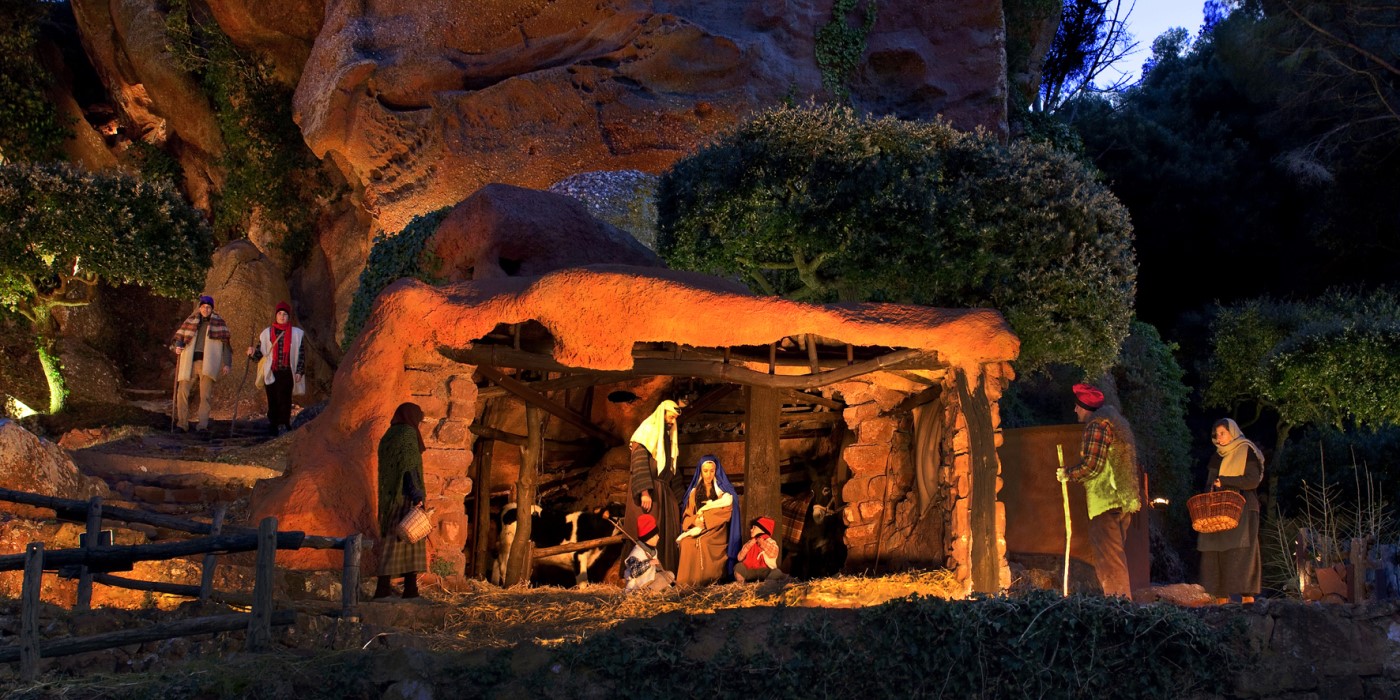
Live nativity scene in Corbera
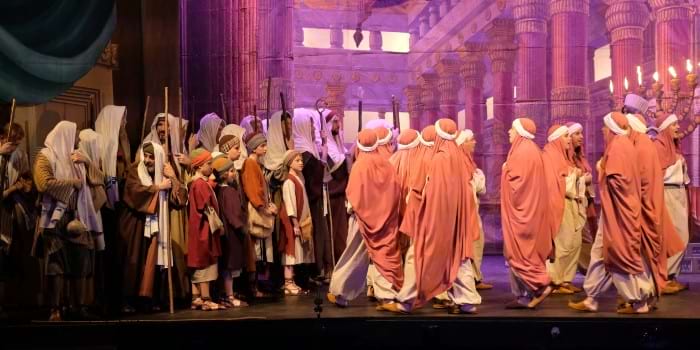
Pastorets (shepherds) in Mataró
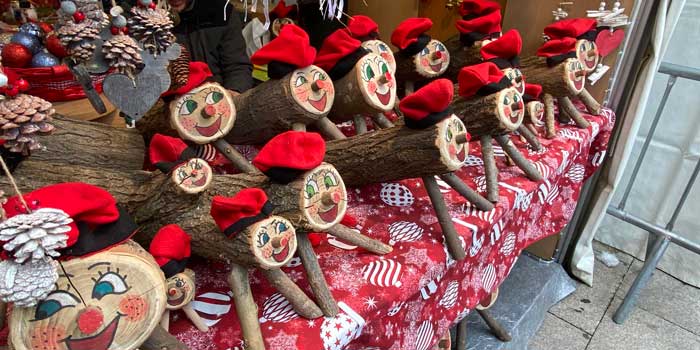
Tiós (logs) at the Mataró fair
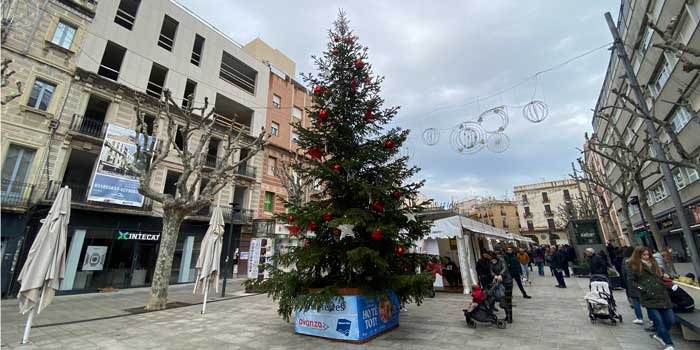
Christmas tree in Mataró
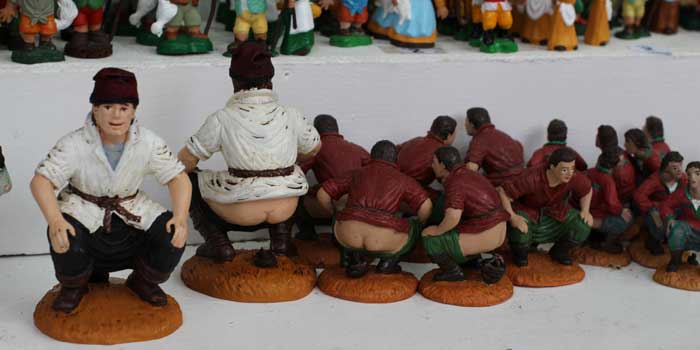
Santa Llúcia fair
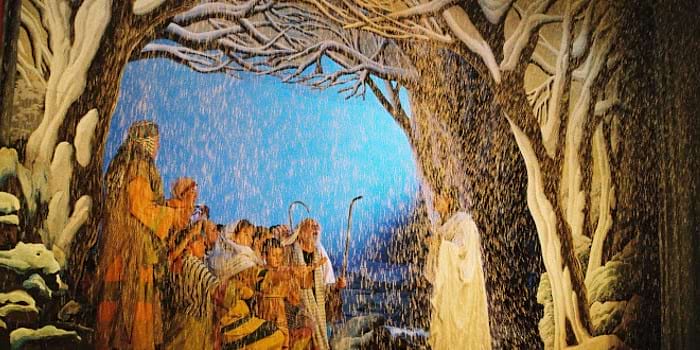
Pastorets (shepherds) in L'Ametlla de Merola
7 interesting things you need to know about Christmas
Setting up the Nativity scene, decorating the Christmas tree, going to see the pastorets (shepherds) or eating turrón (nougat) are traditions we are sure to follow this holiday season. These are customs that have been passed down from generation to generation for a long time. Despite being so familiar with them, do you know their origins and why they have survived to this day? Please read on to find out.
The origins of the Nativity scene
Nativity scene figurines are one of the most eye-catching Christmas decorations. The original idea came from St Francis of Assisi, founder of the Franciscan order, after a pilgrimage to Bethlehem in 1220. Impressed by what he saw in the Holy Land, he wanted to recreate the birth of Jesus with miniatures. Over the centuries, the tradition spread throughout the world.
In the case of the Iberian Peninsula, this custom came about when Charles III ascended to the Spanish throne. It is worth remembering that this sovereign had previously been King of Naples, so he brought the custom of Nativity scenes with him from there.
The Caganer – a truly Catalan figure
We linger on the Nativity scene, while focusing on a figure that is very much part of our tradition; the caganer (pooping man). Once again, we travel back many centuries, but he begins to appear in his usual guise (traditional Catalan costume and barretina hat) in engravings from the late 16th century, at the height of the Baroque period. These illustrations told stories related to Christmas, where he was one of the secondary characters.
What does he stand for? At present, he may seem like a somewhat scatological figure, but his meaning is related to the fertility of the land. This is enhanced by the character’s faeces, which act as natural fertiliser. With the introduction of Nativity scenes, he became a figurine that was also traditionally associated with good luck during the 19th century.
Why do we put up a Christmas tree?
Beyond the Nativity scene, the other great quintessential Christmas decoration is the tree. In this case, it is a tradition that Christianity adopted from the pagan cultures of northern and eastern Europe. In these territories, trees were dedicated to the different deities of their pantheons.
According to a Church account, the change from pagan to Christian custom occurred in the 8th century, when St Boniface cut down an oak tree in Hesse (Germany) dedicated to the god Thor (the Norse god of thunder, not the Marvel character). Before the astonished eyes of the locals, the religious leader read the Gospel and offered the villagers a fir tree symbolising the peace and eternal life of Christianity.
The tradition of turning these trees into decorations dates back to the 16th century. The origin is disputed between Tallinn (Estonia) and Riga (Latvia) in the Baltic States. From there, it spread to different countries until it reached virtually the whole world three centuries later.
The origins of the tió (log)
From one figure we move on to another tradition that is also very typical of Catalonia. The origins of the tió are lost in time. We can go back centuries to see how families burned large logs on Christmas eve (or the winter solstice).
This custom was considered a way of remembering deceased relatives (the ashes of the wood were then scattered) or a kind of offering to ask for bountiful harvests to come.
The tradition of the tió, i.e. feeding the log and hitting it so that it poops out gifts, as we know it today, began about five hundred years ago in small Catalan towns. It gradually spread to the cities and became hugely popular in the 19th century.
What was celebrated before Christmas?
As you know, according to Christian tradition, Christmas celebrates the birth of Jesus. Nonetheless, even before the introduction of this religion, many cultures and civilisations had their own festivals at this time of year. The reason is that it coincides with the winter solstice, which represents the rebirth of the Sun, a key event for societies based on agriculture.
If we look for another reference point in Western civilisation, there is the Roman celebration of Saturnalia. It took place between 17 and 23 December. There were also large family gatherings (with plenty of food) and gifts were exchanged.
Why do we eat nougat and wafers?
Turrón (nougat) has a different history for each of its most famous designations of origin. There are also ancient accounts that trace its origins to the confectionery traditions of Al-Andalus. There is even a legend that tells of its creation very close to us.
This story takes us to Barcelona in 1703, during a plague epidemic that ravaged the city. The authorities wanted to lift the spirits of the population, so they organised a competition among the city’s pastry chefs to create a sweet treat. The winner was Pere Turró, who created the bars that we eat today at festive meals.
This version is considered to be more of a fictional folktale. If we look for a more historical origin, there seems to be some consensus that turrón (nougat) originated in the Spanish Levante region, i.e. in Xixona and Alacant, two of the most renowned places for the production of these sweets, which followed the aforementioned tradition of Arab gastronomy in the Iberian Peninsula.
What about the wafers? Their origins take us back to the early years of Christianity, to the bread that was distributed during Eucharistic ceremonies. Over the years, following the tradition of monastery baking. Already in the Middle Ages, it became a sweet that was sold at the doors of churches.
Later on, it became one of the favourite desserts of the nobles. For example, there is evidence that King James I the Conqueror offered wafers at a Christmas celebration in 1267.
Els Pastorets – from churches to theatres
These charming Christmas performances trace their origins back to the theatrical performances that took place at Midnight Mass during the Middle Ages. The arrival of the Counter-Reformation with the Council of Trent in the 16th century prohibited these popular leisure activities in Catholic places of worship.
Thus, these shows began to be held in popular theatres and enjoyed great popularity in Catalonia by the 19th century. The name comes from the first text that has been preserved, Els Pastorets de Betlem, from 1887. By 1900, many writers had already begun to adapt texts for these shows. Notable names include Jacint Verdaguer and Josep Maria Folch i Torres.
At present, pastorets can be seen throughout Catalonia. Some that you can attend these days are performed in Igualada, Argentona, Cardona and Arenys de Munt. This is a great way to learn about Christmas traditions as a family.
If you prefer live Nativity scenes or other Christmas activities, here you will find everything you need to enjoy the Christmas holidays, wherever and with whomever you want!
More information:
Pessebre vivent del Bages
Pessebre vivent de Corbera
Pastorets de Mataró